
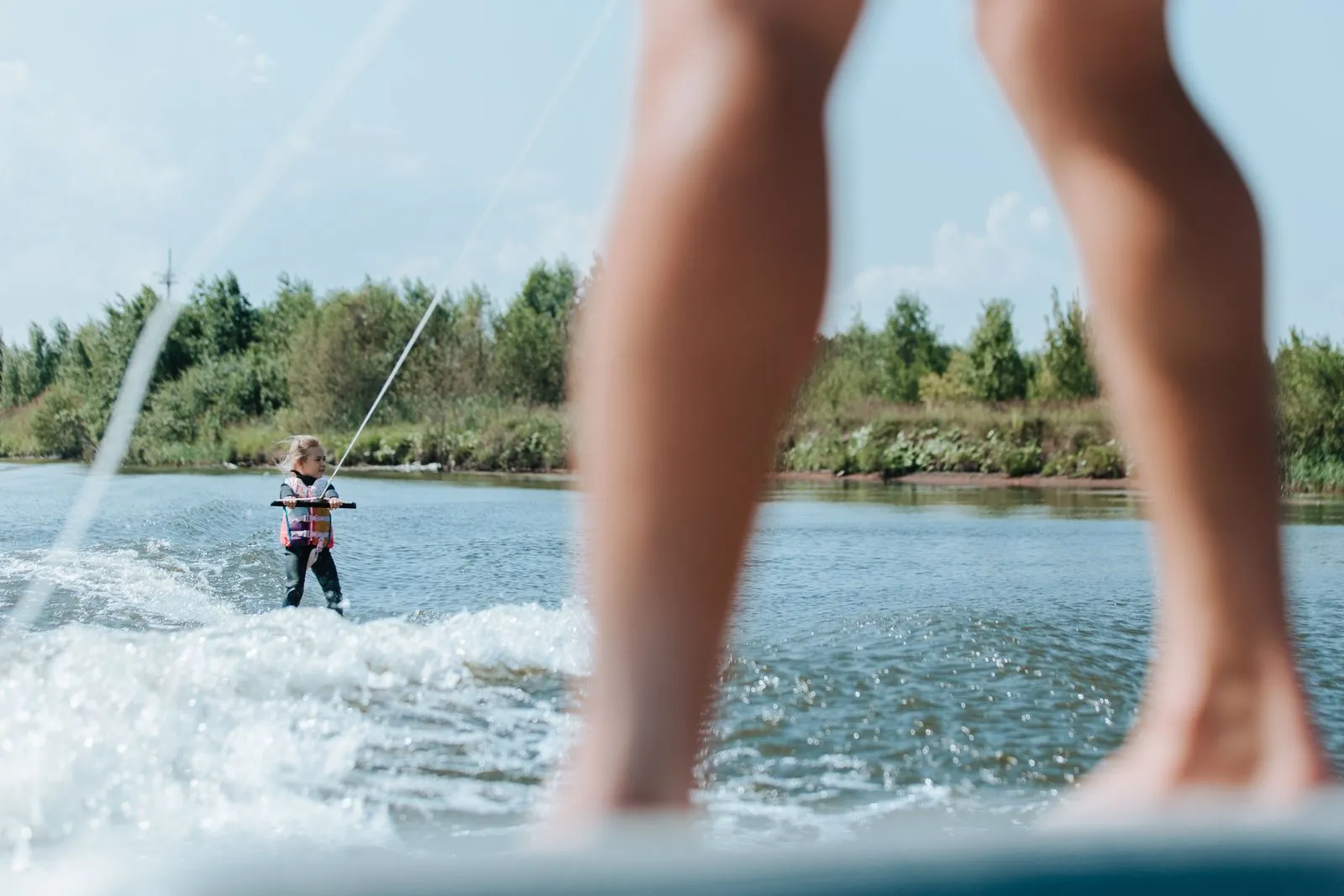
Water sports can teach children confidence, coordination, and respect for the water. Before they get on a board or into a boat, they need to understand how to notice hazards, follow instructions, and ask for help. These skills do not replace close adult supervision or activity-specific instruction. They give children a practical starting point for making safer choices and help families prepare for a session in changing outdoor conditions.
Read the Water and Surroundings
Teach children to pause and look before entering the water. They should notice the marked activity area, entry and exit points, other water users, and any visible hazards such as rocks, weeds, or floating debris. Conditions can change, so a familiar location still deserves a fresh check. Children should stay within the area set by their instructor and never assume that shallow-looking water is safe to enter.
Wind, current, waves, and cold can affect a child’s ability to control equipment or return to shore. Ask them to tell an adult if the water feels different, they feel tired or cold, or they cannot see the instructor clearly. Children should not try to judge conditions alone or continue just because others are still taking part. The adult in charge decides whether an activity should pause or stop.
Prepare Before Getting In
Choose activity-appropriate equipment that fits properly. A correctly sized, securely fastened life jacket or buoyancy aid should be used when required by the activity, site rules, or instructor. Check straps and closures, and make sure the child knows not to remove the equipment on the water. A life jacket is not permission to swim without supervision or to enter water outside the designated area.
Dress for the water and weather, not just the air temperature. Follow the instructor’s guidance on clothing, footwear, sun protection, and any specialist gear. Pack drinking water and a change of clothes, and tell the responsible adult about relevant medical needs, allergies, or concerns before the session. Children should use equipment only after they have been shown how to handle it safely.
Follow Instructions and Stay Connected
Children should know who is supervising them and how to get that person’s attention. Agree on a simple signal or instruction for stopping, returning, or asking for help, and make sure the child can repeat it back. They should listen for briefings, wait for permission before entering the water, and remain with their group. If they lose sight of the instructor or become separated, they should stop, signal for help, and follow the site’s emergency directions.
Set clear limits before activities begin: where children may go, when they must return, and what to do if equipment drifts away. They should never chase a floating item into deeper water or attempt a rescue themselves. Tell an adult immediately if someone is in trouble. Adults should follow the instructor’s response plan and contact emergency services when needed.
Practice Calm Responses
A child who falls in or feels overwhelmed needs a simple response to remember: stay calm, keep their buoyancy aid on, signal for help, and listen to the supervising adult. The exact technique depends on the activity and equipment, so instructors should demonstrate and practice it in controlled conditions. Avoid asking children to try unfamiliar rescue skills or water exercises without qualified supervision.
Review the plan before each session rather than relying on memory from a previous visit. Ask the child to describe the boundaries, the signal for help, and who to approach with a concern. Praise them for speaking up, following directions, and stopping when conditions or their comfort change. These habits support responsible participation without suggesting that any checklist can remove all risk.
Water awareness grows through clear instructions, suitable equipment, close supervision, and repeated practice. Before a session, check the activity’s requirements and make sure your child knows the boundaries and how to ask for help. Cambridge Water Camp can explain its preparation guidance and session arrangements when you contact the team.